
Are You Getting Older… or Just Aging Faster?
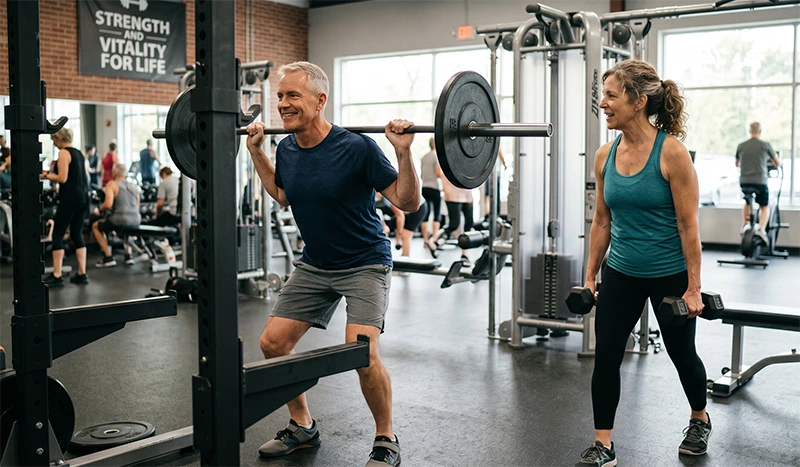
Let’s face it. We all know people who seem to have discovered some secret fountain of youth.
You see them at a class reunion, family gathering or neighborhood event and find yourself wondering:
“Wait a minute… weren’t we the same age?”
Meanwhile, they’re moving well, standing tall, full of energy and somehow looking younger than everyone else in the room.
Most people immediately chalk it up to genetics.
“Must be nice.”
But the truth is a lot more encouraging than that.
You Actually Have Two Ages
Most of us only think about age in terms of birthdays.
That’s your chronological age.
It’s simply the number of years you’ve been alive.
But there’s another age that’s often much more important:
Your biological age.
Your biological age reflects how well your body is actually functioning. In other words, how old your body behaves, not how many candles are on your birthday cake.
And here’s the good news…
The two don’t always match.
I’ve seen people in their seventies who move like they’re in their fifties and people in their forties who move like they’re pushing ninety.
The difference often comes down to lifestyle choices made over time.
What’s Happening Behind the Scenes?
Deep inside your cells are tiny protective caps called telomeres.
Think of them like the plastic tips on the ends of your shoelaces. Their job is to help protect your DNA.
As we age, telomeres naturally become shorter. That’s a normal part of life.
However, research suggests that our daily habits can influence how quickly that process occurs.
One study found that people who performed strength training for as little as 90 minutes per week had telomeres that appeared nearly four years younger than those who didn’t strength train.
That’s a pretty impressive return on investment for an hour and a half each week.
It’s Not Just About Exercise
As much as I love exercise, it’s only one piece of the puzzle.
Several lifestyle factors play a major role in how your body ages, including:
👉 Sleep quality
👉 Nutrition
👉 Stress levels
👉 Physical activity
👉 Alcohol consumption
The challenge today is that we’re constantly bombarded with health advice.
Every day there’s a new influencer telling us to drink something, avoid something, buy something or stand on one foot while balancing a pineapple on our heads.
Okay, maybe not that last one… yet.
The point is that it’s easy to get distracted by the latest trends and overlook the basics that actually move the needle.
Stop Chasing Hacks and Start Building a Foundation
I’m not interested in helping people “stop aging.”
Nobody gets out of that one.
What I am interested in is helping people age better.
✅ Move better.
✅ Feel better.
✅ Stay independent longer.
✅ Enjoy more energy.
And continue doing the things they love for as many years as possible.
That starts with building a strong foundation.
One Simple Thing You Can Do Starting Tonight
If you want to improve your health, don’t start with some complicated biohacking routine.
Start with sleep.
For the next few days, pay attention to a few simple things:
✅ What time you go to bed
✅ What you do during the hour before bed, such as TV, reading or scrolling social media
✅ How rested you feel the next morning
That’s it.
You might be surprised how quickly patterns begin to appear.
Once you see those patterns, you can start making small adjustments.
And those small adjustments often lead to surprisingly big results.
Remember…
It’s never too late for a new beginning.
No matter where you are today, your future health is not completely determined by your past choices.
Every healthy meal, every workout, every good night’s sleep and every positive lifestyle choice is a deposit into your future.
Health isn’t built in a day. It’s built through thousands of small decisions that quietly compound over time.
The goal isn’t simply to add years to your life.
The goal is to add life to your years.
References
Premature Aging Information:
Cleveland Clinic – Premature Aging
Research Study:
Biology Journal Research Study